
Classes of Extractive Labour under Authoritarian Neoliberalism
Coşku Çelik
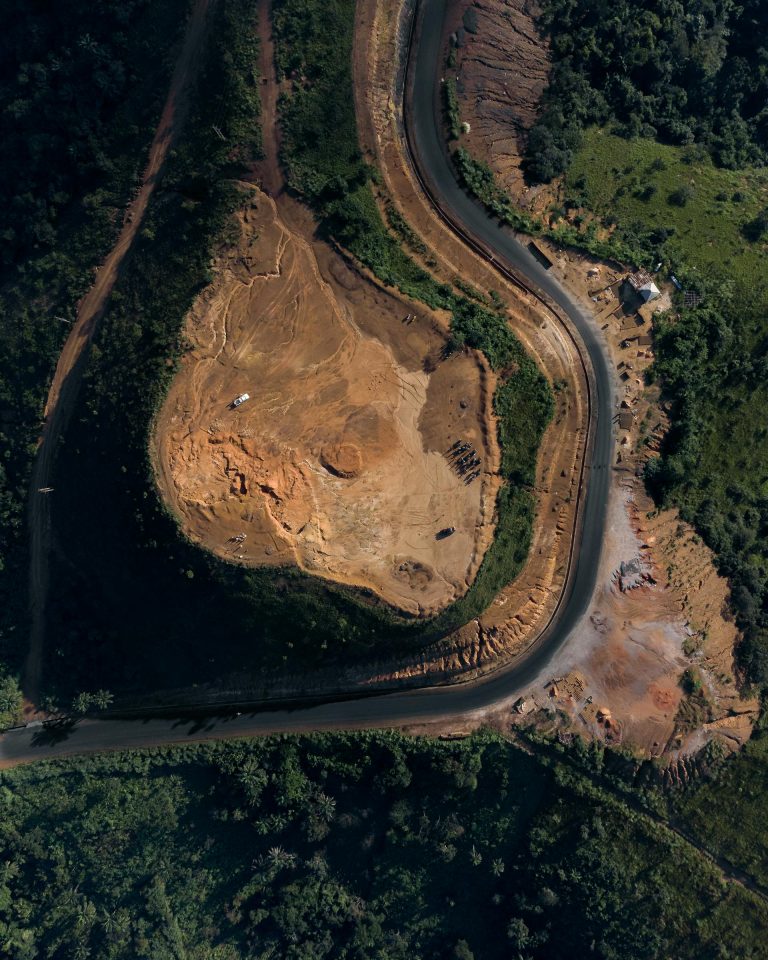
Natural resource extraction has emerged as one of the key rural development strategies for resource-rich countries of the Global South over the last couple of decades, leading to the expropriation of rural commons and private farmlands for extractive investments. In most cases, extractive developmentalism goes hand in hand with neoliberal agricultural policies, such as the withdrawal of the state’s protectionist roles for small-scale farmers, privatization of agricultural state economic enterprises, and a shift towards an agribusiness-dominated agrarian structure. In search for exploitation of both nature and labour in rural areas, extractive capital confronts rural labour markets dominated by ‘classes of extractive labour’, i.e. dispossessed households who can no longer survive merely through farming and are forced to diversify their means of livelihood.
The patterns of dispossession in rural extractive regions do not merely indicate the expropriation of means of production. Instead, I define dispossession as the loss of non-market access to the means of production and social reproduction, such as land, housing, clean water, firewood and so on. Therefore, by dispossessed rural populations, I mean those whose ownership of the means of production and social reproduction may legally persist but who have lost non-market access to them. In this essay, I argue that authoritarian neoliberal regimes provide extractive capital with conditions conducive to controlling and disciplining both nature and classes of extractive labour.
My starting point is Henry Bernstein’s concept of ‘classes of labour’, which refers to those who are “neither dispossessed of all means of reproducing itself, nor in possession of sufficient means to reproduce itself” (pg. 73). The term offers a methodological opportunity to capture the relationship between class and gender, race, and caste. Moreover, it overcomes dualities between urban and rural, agricultural and non-agricultural, and landowning and landless by avoiding straightforward analysis of proletarianization and dispossession in the agrarian South. Similarly, the term allows us to overcome the duality between waged and unwaged work, instead paying attention to the direct and indirect forms of sale of labour power and multiple forms of market mediations of rural populations.
Following Bernstein’s concept, I define ‘classes of extractive labour’ beyond wage workers of extractive industries and to include petty commodity producers in the process of dispossession, unpaid family farmers, waged agricultural workers, seasonal (migrant) agricultural workers, workers of extractive investments such as miners or construction workers, and unpaid care workers within households. Therefore, the analysis of the classes of extractive labour necessitates attention to the ways in which extractive capital uses fragmented local structures at their disposal to minimize labour costs, externalize the cost and labour of social reproduction, and discipline and control the local labour force. Extractive capital is concerned not only with the location of the natural resources it will extract but also with where it can find the cheapest and most easily exploited and controlled labour. As a result, extractive investments are made by considering both natural conditions and the composition of the labour force.
Under new extractivism or extractive imperialism, the capitalist state plays a central role in processes of exploitation, expropriation, and dispossession, albeit in different forms. In some cases, state enterprises are still key actors in extraction (like some parts of India), whereas in many cases, private sector investments are more prevalent. Regardless of who makes the investment, the state’s role remains central and exemplifies what Nicos Poulantzas calls the contradictory nature of the capitalist state: on the one hand, its role is to secure the conditions for the ongoing accumulation of capital by organizing the power bloc; on the other, the state needs to organize the popular consent of the masses.
Although most extractive industries have been privatized under neoliberalism, both central and local state institutions have continued to play a significant role in extractive developmentalism. In this framework, the state’s economic apparatuses at various levels have transitioned from acting primarily as investors to serving as key facilitators of investment. Facilitation here implies the creation of conditions where extractive capital can exploit cheap and disciplined labour and easily overcome social opposition and legal obstacles through stable and strong political power. The ideal state form that ensures these conditions is authoritarian neoliberalism.
The defining feature of authoritarian neoliberalism is the insulation of policy-making processes from popular resistance through mechanisms of marginalization, disciplining, and control. Even though the capitalist state historically applied coercive powers to ensure the reproduction of class relations, under neoliberalism, it has become even more vital to sustain the states’ contradictory role due to the intensification of economic repression and social discipline imposed upon the classes of labour. Two key and complementary limitations of neoliberalism have led to increasing authoritarian tendencies. On the one hand, neoliberal projects remain rooted in class interests and agendas of capitalist classes. On the other hand, they have little to offer to the classes of labour other than deterioration of the conditions of production and social reproduction as they fail to meet essential needs and expectations, such as job security, basic conditions of living, provision of public services, and ecological justice.
Therefore, extractive imperialism and extractive developmentalism has also largely operated through authoritarian measures in the Global South. As it is built on accumulation by dispossession and accumulation by displacement (pp. 111-147), and expropriation of non-market access to the means of production and social reproduction for the classes of extractive labour, the use of force is a necessary condition for it.
The authoritarian neoliberal states in the Global South play a pivotal role in providing political stability and market predictability for national and transnational extractive capital. It is expected to provide incentives to extractive capital, such as direct subsidies or ease of environmental clearance. At the same time, it needs to repress any kind of resistance against investments in natural resource industries by using authoritarian measures. In this respect, the state plays an authoritarian role in creating conditions for the continuous accumulation of capital by creating optimal conditions for extractive capital to exploit both nature and the “unlimited supply of surplus labour” generated by massive dispossessions amid the neoliberal transformation of agriculture. Furthermore, it ensures the conditions for top-down extractive developmentalism in which the processes of exclusion, dispossession, and extraction operate simultaneously yet dialectically (pp.161-177).
In other words, authoritarian neoliberalism constitutes the ideal condition for ongoing processes of exploitation of nature, dispossession of classes of extractive labour from the control of means of production and social reproduction, and their exclusion from decision-making processes around investments and policies that accelerate the exploitation of their labour power and conditions of living.
Coşku Çelik is Assistant Professor at Kadir Has University, Istanbul.
This is part of a series of specially curated blog posts in which authors are invited to reflect on the theme of ‘Agrarian Questions’, highlighting different, even novel, ways of interpreting and engaging with the core questions of agrarian political economy in different historical and contemporary contexts. The posts will be released over the coming months as part of the 25th year celebrations of the Journal of Agrarian Change. You can find the full series of blog posts here.
Photo by Chime Chinedu via Pexels